EIT project in Cyprus featured in EU report

Our EIT Climate-KIC Cyprus #younginnovators program featured in UNECE Report on Youth Engagement for ESD Cyprus University of Technology Cyprus Energy Agency Climate-KIC EIT – European Institute of Innovation and Technology Andri Ioannou Andreas Pastides Theognosita Karra. Thank you Aravella Zachariou for inviting us! Reading: Engaging Young People in the Implementation of ESD in the UNECE Region: Good Practices in the Engagement of Youth in Education for Sustainable Developmenthttps://unece.org/info/Environment-Policy/Education-for-Sustainable-Development/pub/370223?fbclid=IwAR0MhVXhzQ52iyo162uP-aMhg2NhWn8rhY5_5lOP_TaP5EPL7AYxMjuLPVI

ETR&D Special Issue Call: Learning Through Design and Maker Education

Special issue ETR&D Special Issue Call:Learning Through Design and Maker Education https://link.springer.com/journal/11423/volumes-and-issues/72-1 Guest Editors: Andri Ioannou, Cyprus University of Technology (Cyprus Interaction Lab), CYENS Center of Excellence, <andri@cyprusinteractionlab.com>, http://andriioannou.weebly.com/Brian Gravel, Tufts University, <brian.gravel@tufts.edu>, https://sites.tufts.edu/briangravel/ Research topics to be addressed include but are not limited to: Learning design meshing pedagogy and practice to drive learning in maker education Development of empirically driven conceptual and analytical frameworks for assessing making Uses and tensions around technology (digital or analog) in learning through design Understanding the interplay and dynamics of teaching and learning interactions, among the learner, educator/tutor and technology in making contexts Critical perspectives involving issues of power and equity in maker education across contexts International perspectives on technological, practical, empirical, and conceptual aspects of learning through design and maker education Manuscript Submission- due in the Editorial Management system: November 30, 2022 Submission InstructionsWhen ready to submit your manuscript at https://www.editorialmanager.com/etrd/ please choose “Research Section (Johnson)”. When …

FemPower: Gender Equality in the Clean Energy Transition

FemPower – Gender Equality in the Clean Energy Transition is a Cooperation Partnership in Higher Education. Our journey towards a just and gender equal CET started in February 2022. FemPower aims to increase female representation in the sector, empower and prepare those who are already active in academia or the market, and integrate the gender dimension in CET research and development. The objectives of the project are the following: Develop methodologies and tools to establish gender mainstreaming in the CET Develop, test and evaluate transversal Open Educational Resources (a Massive Open Online Course and an interactive map) and a gender mainstreaming checklist especially for HEIs in the field of CET to raise gender awareness in CET education and increase female participation in the research activities of the involved organizations Develop gender inclusive co-creation methodologies for cross-sectoral and international cooperation in the field of CET, as well as test and evaluate them Develop …

CUT and DR FLEMP project

CUT is one of the members of the consortium of the DR FLEMP project   The DR FLEMP project [Erasmus + KA2] aims to support digital transformation in Foreign Language Education (FLE) in the EU, whilst focusing on filling the existing gaps and raising efficacy of foreign language education by nursing and caretaking students, as well as already qualified professionals, through Immersive learning environments that can address the challenges of digitization in educational systems. The coordinator of the project is the Internationale Akademie für Management und Technologie (INTAMT) e.V., Germany. CUT is one of the partners of the project along with SPRACHiNVEST GmbH (Germany), Utenos kolegija (Lithuania), UMEA UNIVERSITET (Sweden), and Internationale Agentur für Marketing und Technologietransfer (INTAMT), GmbH (Germany). The DR FLEMP project and its aims were presented in February at the Cyprus Interaction Lab monthly meeting, where instructors and academics attended and it will also be presented in …

ERUM Open Educational Repository

The ERUM Open Educational Repository is a free and open collection of the study materials that have been developed in the framework of the EU-funded ERUM project. Aimed at Higher Education students from all study fields, the 15 modules listed in the Catalogue intend to provide learners with an experiential journey to deepen their knowledge about mis/disinformation, equip them with critical thinking skills to improve their resilience to “fake news”, and raise awareness about its impact on our society.   Open Educational Repository 

FeSTEM Final Multiplier Event

The event “Breaking the glass ceiling” in the context of the European project “Female Empowerment in Science, Technology, Engineering and Mathematics in Higher Education (FeSTEM)” was held with great success on Thursday, June 2, 2022 at the Cyprus University of Technology in Limassol. The aim of the event was to disseminate all the project’s final results and outcomes to the target audience in Cyprus, as well as to highlight the valuable benefits of the FeSTEM CoP as a place to connect, discuss and access services and learning material. Of paramount importance was the presentation of Anna Aristotelous, Director of the Central Prisons Department, who set the example of the Central Prison’s Department as an example of courageous leadership, which managed to overcome obstacles and difficulties by adopting a human-centered approach and following culturally and gender-sensitive principles. The event indicated the successful completion of the project. Its main results are available …

ERUM Learning Modules now accessible as OER

25 May, 2022  One of the main deliverables of the ERUM project was the production of learning material to foster students’ media and information literacy as well as transversal skills such as critical thinking. In this context, we developed 15 learning modules that focus on issues related to mis- and disinformation and allow for an integration into diverse fields of study. The learning modules address controversially discussed topics that are prone to false information (such as migration, 5G or global warming), provide general knowledge in relation to “fake news”, conspiracy myths and science communication as well as methodological know-how when it comes to visual analysis, reporting on scientific issues or audiences of scientific information. Some of the developed modules were piloted during our 2nd Intensive Study Programme with students from throughout Europe and all modules were furthermore tested by integrating the learning material into postgraduate and graduate courses of the …

Fighting the battle of mis-/disinformation one action at a time

There is no denying that misinformation and disinformation have gained incredible momentum in the past couple of years, particularly after the outbreak of the pandemic. On one side, what the United Nations and the World Health Organization have identified as infodemic has once more confirmed that no topic is immune to such phenomena, not even science-related subjects. On the other hand, this stressed how important it is to make sure that quality information is perceived as a public good, and as such it demands to be safeguarded not only by individuals but also by the (democratic) institutions. Active engagement and concerted effort Therefore, counteracting the spread of disinformation and misinformation requires an active engagement and concerted efforts from multiple stakeholders, including the media industry, Higher Education Institutions, and policymakers. Indeed, the circulation of false content is a real risk that can undermine the democratic process, have an impact on decision-making, or polarise …

ERUM’s closing conference: MIL and policy recommendations revisited

On April 28th the ERUM partners – under the lead of the University of Vienna – hosted the third ERUM conference “Facts & Figures | Evidence-based Information in Contemporary Societies: The Role of Academia and the Media” to present and discuss the project’s outcomes. An interested audience from higher education and media institutions as well as (non)governmental bodies was able to participate in Vienna as well as online. How To: Enhancing Media and Information Literacy In the morning, participants had the chance to get an introduction to the ERUM project and find out more about the learning material that was developed in the course of the project. The material will be available to the public as Open Educational Resources by the end of May and addresses different aspects related to the fostering of higher education students´ media and information literacy. The learning modules build upon the previous outcomes of the project …

Connecting Women in STEM – 3rd Multiplier event of the FeSTEM project

We are pleased to invite you to the 3rd Multiplier event of the FeSTEM project, which is organised by the team of SMILE Lab of the University of Macedonia, Greece, which will take place on Monday, May 16th, 2022 between 11:15-15:30 CET. We are pleased to invite you to the 3rd Multiplier event of the FeSTEM project, which is organised by the team of SMILE Lab of the University of Macedonia, Greece, which will take place on Monday, May 16th, 2022 between 11:15-15:30 CET. The event entitled “Connecting women STEM: building a stronger network & a brighter future !” will introduce participants to the final outcomes of the FeSTEM project, but will also host wonderful keynote speakers and panelists that will discuss today’s challenges for girls and women in STEM and their promising future.  Keynote speakers: Dr. Lina Ntokou, Yale University, USA, Founder of “Greek women in STEM”  Dr. Lilian Balatsou,  Bangor University, UK, Founder of “Greek Girls Code”  Panelists:  Dr. …

Consortium meeting for EdTech project and plans for the first face to face meeting in Cyprus (via CYENS)

At the last monthly consortium meeting, partners of the ENTER project discussed about various aspects of the most prominent work packages leading to the implementation of the Learning Innovation Hubs (LIHs) that will take place in the fall. The discussion was mainly about the structure of the online learning environment for the blended learning courses, the establishment of the EdTech LIHs in the four partner countries (Portugal, Germany, Greece and Cyprus) and the validation of the learning courses through the pilot seminars. The next consortium meeting of the project will take place physically for the first time in Cyprus, at the CYENS premises on 19th-20th of May. We are looking forward to having our esteemed guests in Nicosia to work together towards contributing to the establishment of the LIHs.

QUASI – Qualitative Study on SELFIE Impact (via CYENS)

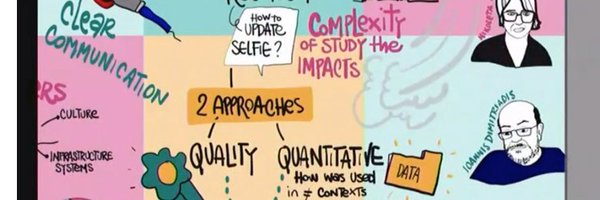
QUASI  Qualitative Analysis of SELFIE (QUASI) is an ongoing study funded by the Joint Research Center which aims at assessing the impact of SELFIE and understanding in depth how SELFIE is used and perceived by teachers, students and school leaders in 3 different countries in Europe (Spain, Netherlands, and Cyprus) using qualitative methodologies. https://ec.europa.eu/newsroom/selfie/items/737144/en The project is sponsored by the Joint Research Center, the European Commission’s science and knowledge service. The goals of the project are the following: Understand the digital readiness of 15 schools from three different countries in Europe (Spain, Netherlands, and Cyprus). Explore how SELFIE is used and perceived by its users in 15 different schools. Identify and describe the impact SELFIE is having in 15 different schools in Europe. Situate the impact of SELFIE in the more complex nexus of interrelated concepts like: digital readiness of schools, school management models, the changing landscape of technologies, theory …

Innovative digital solutions to assess 21st century skills in makerspaces: Multiplier event in Cyprus

Are you an educator or makerspace facilitator? Are you interested in making?  Would you like to know how to promote self-assessment and help your students develop their 21st century skills while they are working in making activities?  If so, register for our online event on Wednesday, 13/4/2022 at 17:00 (Greek time) and be introduced to Assessmake21 digital self-assessment tool for 21st century skills in makerspace contexts. The tool has been designed and developed by the Assessmake21 consortium and is currently used as part of pilot studies in schools and makerspaces in the four partner countries (Ireland, Sweden, Greece, and Cyprus), despite the challenges occurring due to the pandemic. You will get the chance to: Discuss with experts about making activities and their significance in education View successful makerspace models that have been established in Cyprus Get a glimpse of how the Assessmake21 tool is currently being used in schools and …

JOIN US: “Dare to STEM!” – A multiplier event of FeSTEM project

JOIN US: “Dare to STEM!” – A multiplier event of FeSTEM project We are pleased to invite you to the 2nd Multiplier event of FeSTEM project, in which ARIS participates as a partner, that will take place on March 15th, 2022 at ARIS in Limassol. The event under the title “Dare to STEM!” will provide information on the work conducted in the FeSTEM project and will open the discussion about the challenges encountered by women in the STEM industry and ways to promote female empowerment. Keynote speeches: “STEM UP!” – Dr. Xenia I. Loizidou, Co-founder ISOTECH Ltd & NGO AKTI Project and Research Centre “Challenges encountered by Women in Stem: the industrial perspective” – Dr. Marianna Prokopi-Demetriades, Founder/Director at Theramir Ltd, Promed Bioscience Ltd, RSL Revolutionary Labs Ltd Check out the Agenda for more information. Space is limited, so don’t forget to register here!

usability study

Consultancy project: UX Study of New online service for an e-banking System

Consultancy project: UX Study of New online service for an e-banking System February 2022 The EdMedia MRG (a natural extension of the Cyprus Interaction Lab) conducted a user-experience (UX) evaluation study with users of a new online service, that will be integrated into an existing e-banking system. The study, which concentrated on a high fidelity prototype (i.e. a prototype that closely resembles the final service/product), aimed to understand how the new service responds to the needs of its prospective users, to uncover possible challenges regarding its usability and overall user experience, and to understand user preferences amongst various other design alternatives. A team of 4 UX researchers at CYENS/CIL planned and executed this study with various participants in a period of just over a week. Through the employment of formative and summative methods and the gathering of both behavioral and attitudinal data during prototype-user-testing, this type of UX studies can help provide …

EDUBOTS closing event – Book your ticket! (via CYENS)

The EDUBOTS consortium of partners (#differ.chat, #University of Leeds #Faculty of Organization and Informatics #CYENS Centre of Excellence #Hubert.ai #Universidad de Granada) is planning the closing event of the project on Tuesday, Jan 18th, entitled “Best practices of chatbots in higher education: Findings and insights from 2 years of applied research”. Join the event!  FB: https://www.facebook.com/events/4609612502491316 LnkdIn: https://www.linkedin.com/events/bestpracticeofchatbotsinhighere6879133835964100608/ On a high-level, Edubots has the goal of improving educational attainment in European higher education. We do that by exploring best practice use of chatbots, and by creating a learning community of Educators in Europe. 1. We focus on engagement between students and educators facilitated by chatbots. 2. We focus on increasing the frequency and accuracy of feedback between educators and students. 3. Project pilots are designed with the overall goal of decreasing dropout rates by using chatbots. 4. We form a learning community of educators to participate in the project activities and make use of the research, free learning resources, …

Antigoni Parmaxi

Postdoctoral researcher and Special Teaching Staff

Research Interests: Computer assisted language learning, participatory design methodology in language learning, intercultural education, curriculum development and lifelong learning.